
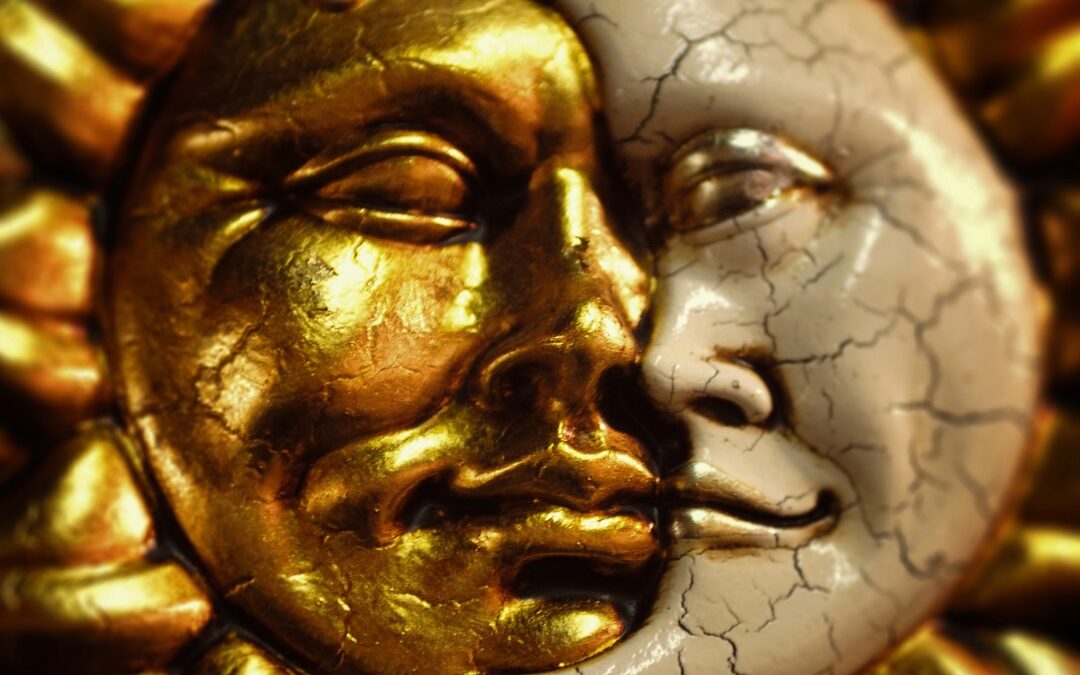
There seems to be a resurgence of Freudian psychoanalysis and Jungian analytical psychology. Perhaps it is just me and my bias, since I have been interested in Jungian psychology for many years. This past October, I shared a blog post about Jungian Analysis and the esoteric, highlighting key influences – alchemy, Gnosticism, and I Ching and astrology. For this blog post, I want to take a deeper dive into how alchemy shapes analytical psychology.
Unlike Freud, who mapped the psyche primarily through the lens of repressed sexual drives, Jung proposed a vast inner world. Jung believed the psyche contained not only the personal unconscious — the reservoir of forgotten or repressed personal memories — but also the collective unconscious. The collective unconscious can be defined as a part of the unconscious that has never been conscious and exists due to heredity, made up of archetypes.
Archetypes, such as the Shadow, Anima and Animus, the Trickster, the Great Mother, the Wise Old Man, etc., are not inherited memories but inherited tendencies. They are dispositions to form certain kinds of images and emotional responses. They express themselves through mythology, dreams, and religion.
Much like Freudian psychoanalysis, Jungian analytical psychology is loaded with many clinical terms. To simplify and digest the information to follow on alchemy, let me clarify a few constructs. Jung’s view of the self and the process of individuation is at the core of Jungian analysis, and what separates it from other psychoanalytic theories.
The self is used to describe an understanding of who we are. The ego develops from it.
Individuation is a lifelong process of integrating the unconscious parts of the self into a coherent whole.
The process of psychological transformation, or individuation, resembles what the alchemists thought they were doing with matter. That is, alchemists believed they could transform lead and other metals into gold, a perfected form of metal. While no human ever truly becomes perfect, we can think of the process of individuation as wholeness and completion.
Perhaps this could also be explained through symbolism. You may have heard of the Philosopher’s Stone. It was believed to be an alchemical substance that could change base metals into gold. In analytical psychology, the self is the philosopher’s stone, and true individuation is gold.
Central to Jung’s alchemical theory are the sequential stages of the Opus Alchymicum (translated to the great work). It is believed that this work is the process of individuation.
The Opus Alchymicum is an alchemical manuscript, documenting a spiritual journey through symbolic imagery and text.
Alchemical Stages
1. Nigredo — The Blackening
This stage represents the confrontation with the Shadow, the dark, repressed, unlived side of the personality. It may contain depression, disorientation, and trauma, but also positive traits such as assertiveness and creativity. Through shadow work, one begins to explore and integrate repressed content, morality, projection, strengths that were not allowed or accepted in childhood, and personas.
2. Albedo — The Whitening
This stage represents insight, self-reflection, and purification. After the confrontation with the shadow, one develops new clarity, self-awareness, and the emergence of the anima or animus. A dawning self-awareness. Yet the understanding of self is often incomplete and abstract.
The anima is the unconscious feminine side of men. The animus is the unconscious masculine side of women.
3. Citrinitas — The Yellowing
This stage signifies spiritual enlightenment. In other words, a higher state of consciousness. It is a stage of renewal.
4. Rubedo — The Reddening
The final stage is a culmination of opposites and completion. Masculine and feminine, conscious and unconscious, spirit and matter are wed. One might compare this to the Buddhist construct of enlightenment.
Alchemy in Clinical Practice
The [therapist] is always the one who is…affected…transformed. He has to learn that he
is not just a technician, but a co-participant in a profound human process.
— C.G. Jung, The Practice of Psychotherapy
It is fair to believe that you may be asking, “How is this used in psychotherapy?”
With an open mind, the terminology and symbolism of alchemy can provide a way to explore and understand a client’s experience, their dreams, and their fantasies. It may orient the therapist as to where the client is in their individuation process.
For example, if a client describes a dream with imagery of a dark basement, decay, or even being buried alive, this could be representative of the Nigredo stage. Perhaps this dream state is a necessary process for the client to confront what has been unaccepted, repressed, or neglected in their life. Whereas a dream of the unification of two opposing parties may symbolize psychological integration and greater steps towards individuation.
When considering psychotherapy and the therapeutic relationship from an alchemical perspective, one can think of the therapist as a vessel. That is, the therapist creates a safe and protected space to hold the client’s experience, while also witnessing the process. Though the therapist’s role is not to interfere with the process, the therapist can support the client by creating a space to discuss the process and gain insight.
Are you ready to explore your alchemical process?
Sources
📞 Contact us to schedule an appointment.
📍 Serving the Central New York area, including Camillus, Skaneateles, Marcellus, Baldwinsville, Liverpool, and Syracuse.
Telehealth is available in NY and PA.